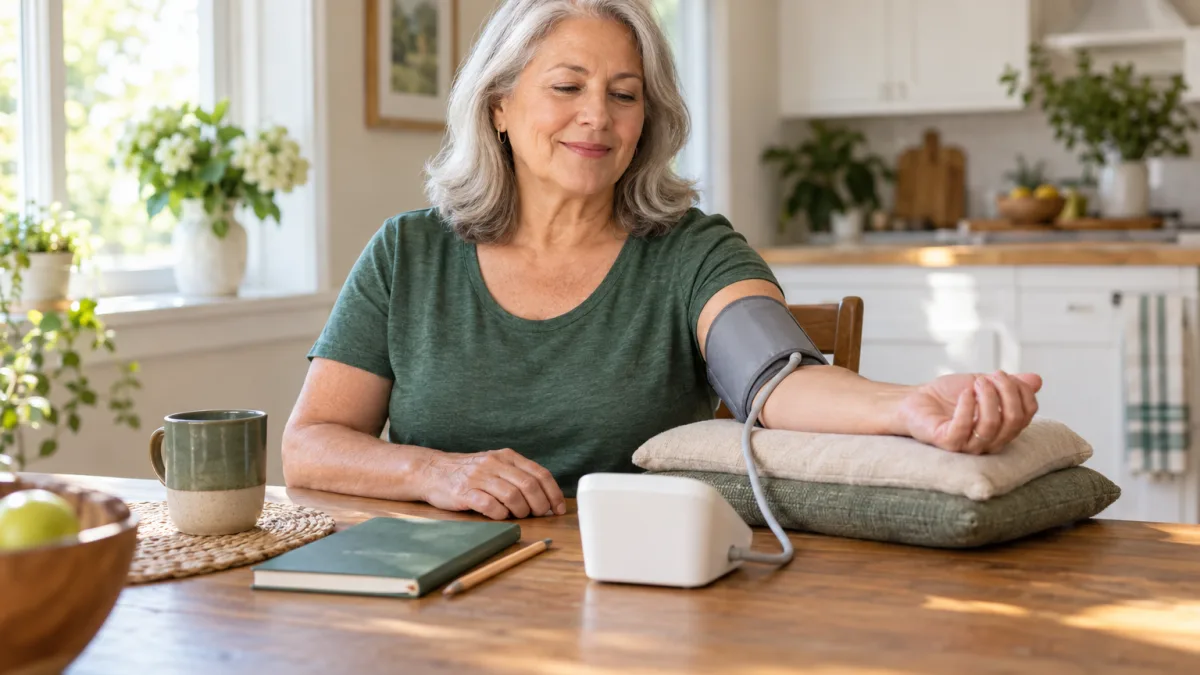
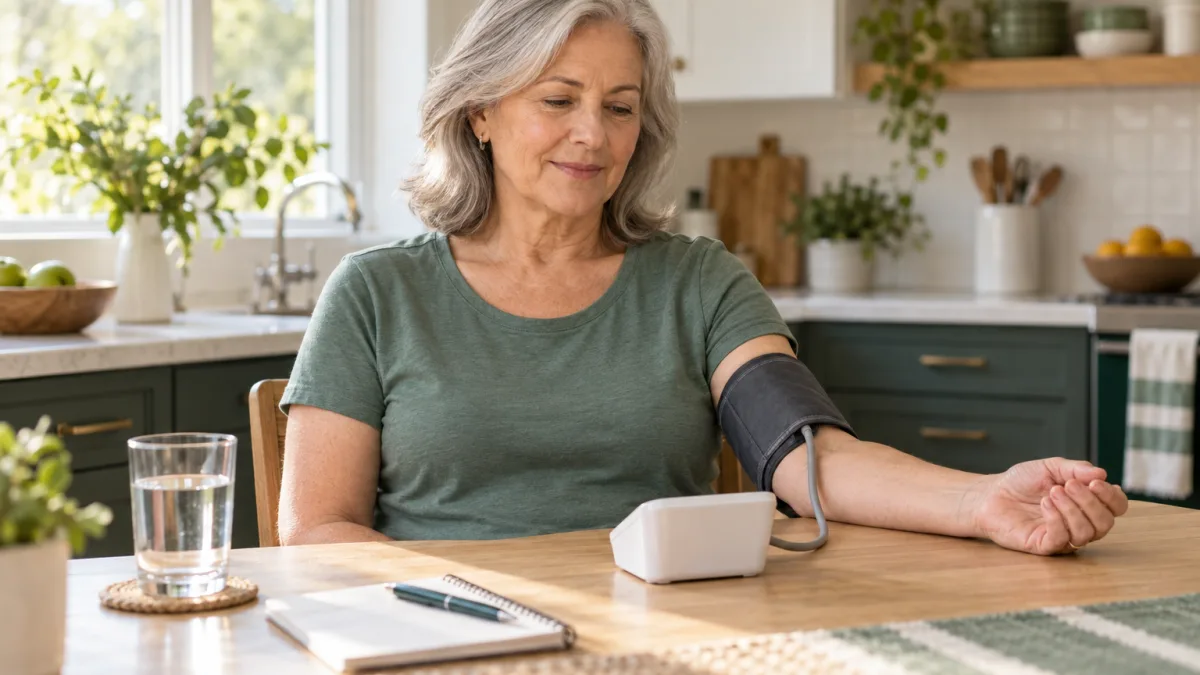
High blood pressure usually has no warning signs or symptoms, and many people do not know they have it. That is why the CDC says measuring your blood pressure is the only way to know whether you have high blood pressure.
A reading at the doctor's office is only a snapshot of one moment. Measuring at home, the right way, gives you and your doctor a much clearer picture. The catch: small mistakes, like crossing your legs or letting your arm hang down, can push the number up. This guide walks you through every step.
Why measure your blood pressure at home?
The American Heart Association (AHA) recommends home monitoring for all people with high blood pressure, to help their healthcare professional know if treatments are working. Home readings can also help confirm a diagnosis of high blood pressure.
Home monitoring is especially important for:
- anyone diagnosed with high blood pressure;
- people starting or changing their blood pressure treatment;
- people who need closer monitoring, especially those with risk factors for high blood pressure.
It also works. According to the CDC, people with high blood pressure are more likely to lower their blood pressure when they measure it at home and get support from their health care team than when they don't.
Home readings can also catch the "white coat" effect: feeling nervous about having your blood pressure taken can raise the reading. As many as 1 in 3 people who have a high reading at the doctor's office may have normal readings outside of it, according to the CDC.
Important: home monitoring does not replace regular doctor visits. And never stop taking blood pressure medication without checking with your healthcare professional, whatever your home readings say.
Step 1: Choose the right monitor
The AHA recommends an automatic, cuff-style monitor that goes on your upper arm. When you shop for one:
- Skip wrist and finger monitors. They give less reliable readings.
- Choose a validated monitor. If you're not sure, ask your healthcare professional or pharmacist, or look at the options on validatebp.org.
- Check who it is validated for. If the monitor is for a senior, a person who is pregnant or a child, make sure it is validated for them.
- Get the right cuff size. Measure around your upper arm and choose a monitor that comes with the correct cuff size. A cuff of the wrong size gives an inaccurate reading.
Once you have your monitor, take it to your next appointment. Your healthcare professional can check that you are using it correctly and getting the same results as the equipment in the office. Plan to bring it in once a year, or as the manufacturer recommends, to make sure the readings stay accurate.
Step 2: Get ready 30 minutes before
What you do in the half hour before a reading matters:
- Don't smoke, drink caffeine or alcohol, or exercise within 30 minutes. Any of these can make your reading higher.
- Don't eat or drink anything for 30 minutes before you measure.
- Empty your bladder.
- Remove any clothing from the arm you will use. Never measure over a sleeve.
Step 3: Sit the right way
Your position can change the number on the screen:
- Sit in a comfortable chair with your back supported.
- Put both feet flat on the floor and keep your legs uncrossed.
- Rest your arm on a table or other flat surface so it is at heart level. Prop a pillow under your arm if you need to.
- Place the cuff on bare skin: the middle of the cuff on your upper arm at heart level, and the bottom of the cuff directly above the bend of your elbow. It should be snug but not too tight.
- Rest quietly for at least 5 minutes before you start. Don't talk or use your phone, during the rest or the reading.
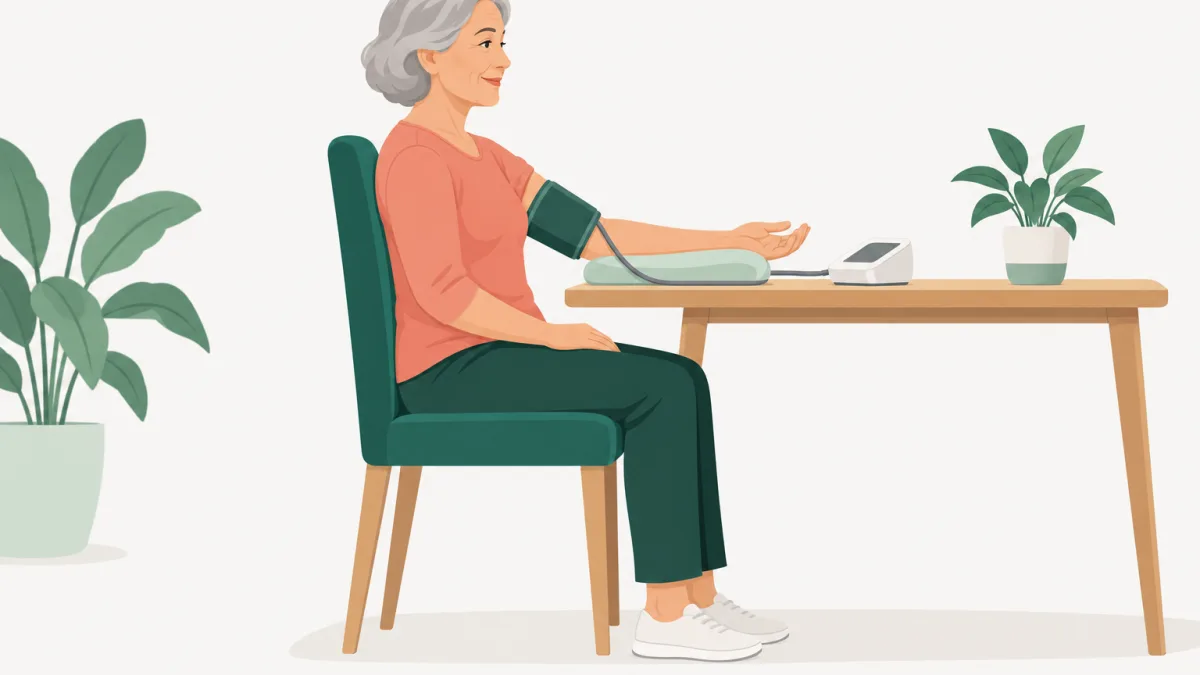
You can use either arm. There is usually not a big difference between the readings on each one.
Step 4: Take two readings and write them down
- Measure at the same time every day. Ask your healthcare professional how often you should measure.
- Take two readings, one minute apart, each time you measure.
- Record every result in a log or a printable tracker. If your monitor stores readings in its memory, bring it to your appointments.
How to read your numbers
Your blood pressure is recorded as two numbers, in millimeters of mercury (mm Hg):
- Systolic (the top number) is the pressure of your blood against your artery walls when your heart beats.
- Diastolic (the bottom number) is the pressure against your artery walls while your heart rests between beats.
The AHA uses these categories:
| Category | Systolic (top number) | Diastolic (bottom number) |
|---|---|---|
| Normal | Less than 120 | and less than 80 |
| Elevated | 120 – 129 | and less than 80 |
| Stage 1 hypertension | 130 – 139 | or 80 – 89 |
| Stage 2 hypertension | 140 or higher | or 90 or higher |
| Severe hypertension | Higher than 180 | and/or higher than 120 |
Only a doctor or other medical professional can confirm a high blood pressure diagnosis. Share your log with them rather than diagnosing yourself from a single number.
What to do if you get a high reading
- One high reading is not an immediate cause for alarm. Take your blood pressure a second time and write down both results. Then check with your healthcare professional to see if there is a health concern, or a problem with your monitor.
- If your readings are suddenly higher than 180/120 mm Hg, wait at least one minute and test again. If they are still very high, contact your healthcare professional immediately.
- Call 911 if your blood pressure is higher than 180/120 mm Hg and you have symptoms such as chest pain, shortness of breath, back pain, numbness, weakness, a change in vision or difficulty speaking. This is a medical emergency: don't wait to see whether it comes down on its own.
Common mistakes that skew your reading
- Measuring over clothing.
- Crossing your legs.
- Letting your arm droop at your side instead of resting it on a table at chest height.
- Talking or looking at your phone during the reading.
- Having coffee, a cigarette or a workout in the 30 minutes before.
- Using a cuff that is the wrong size, or a wrist or finger monitor.
These details matter. As the CDC points out, a reading that is lower than your real blood pressure may give you a false sense of security, and one that is higher may lead to treatment you don't need.
Make it a daily habit
One measurement tells you what your blood pressure is at that moment. A record of readings taken over time gives a much more complete picture, and helps you and your doctor see if your routine is working.
So keep your monitor where you will see it, pick a time that fits your day and log every reading. Pair your log with the heart-healthy habits your doctor recommends, such as a balanced diet and regular exercise.
Some people also look for extra support for healthy blood pressure. If you are considering anything new, talk to your doctor first, keep taking any treatment you've been prescribed and keep measuring: your log will show you and your doctor how your routine is going.